

HJOOZAT
WhatsApp-native booking software for Gulf service businesses — branded booking pages, WhatsApp OTP verification and automated messaging, in Arabic and English.
At a glance
- Active businesses
- 67
- Paying customers
- 3
- Free-to-paid conversion
- 4.5%
- Revenue concentration
- 71%
- Languages
- AR + EN
- Business setup
- 5 min
- Target vertical
- Clinics
- Kuwait market
- KWD 550–760k
On the platform today
1 Enterprise, 2 Premium
Inside the normal 2–5% band
In a single account
Bilingual booking pages
Signup to a live page
Dental, derma, physio, veterinary
Per year. Author estimate, not measured
About
HJOOZAT gives a clinic, salon, spa or service team a polished booking page and a console to run it from: staff, services, availability, pricing, payments and share previews in one place. A business is set up and live in about five minutes, in both Arabic and English.
The bet is not that service businesses need scheduling software — they are already served by plenty of it. It is that in a region where WhatsApp is the default customer channel, booking software that lives inside WhatsApp beats booking software that treats it as an afterthought.
The problem
Gulf service businesses — clinics, salons, studios, courts, workshops — run their bookings through WhatsApp and a paper diary. Four failures follow from that.
The owner is the booking system. They are mid-treatment, mid-haircut, mid-class, while fifteen "when are you free?" messages pile up and get answered three hours later — by which time half those customers have booked somewhere else.
No-shows go unmanaged. No reminder, no confirmation, no deposit. A no-show is a slot that earned nothing and cannot be resold.
There is no customer record. When the owner changes phone, the entire history of the business goes with it.
And foreign tools do not fit. They are English-first, email-first, and assume a card-on-file culture. Gulf customers message; they do not email.
The cost of this is measurable, which is what makes it sellable. WhatsApp-based appointment systems are reported to cut no-shows by 40–60% and save more than ten hours a week for businesses running twenty or more daily slots.
What we built
The product is live at hjoozat.com, in Arabic and English.
A business gets a branded public booking page — logo, colours, bilingual copy, service details, staff profiles and share previews — and a console behind it for staff, services, availability, pricing, publishing and payments. A customer picks a department, then a specialist, then confirms and pays by cash, payment link, gateway or manual confirmation.
The part that is hard to copy from outside the region is the messaging layer: WhatsApp OTP verification, Arabic-first templates, and the Business Solution Provider onboarding that a salon or clinic owner will never complete on their own. Meta does not allow direct API access — a business must go through an approved provider, submit a trade licence and authorised-signatory ID, and get every message template approved. Someone has to do that for them, and that someone can charge.
The console is built for three roles at once: the platform operator approving businesses and handling upgrades, the business admin running daily operations, and the customer booking in under a minute.
Market
Kuwait's appointment-based service businesses number roughly 5,200–7,100: some 3,000–4,000 salons, barbers and beauty businesses; 1,500–2,000 clinics, dental and allied health practices; 400–600 fitness studios and sports venues; and 300–500 veterinary practices and workshops.
Perhaps a quarter of those will pay for software, giving a serviceable market of 1,300–1,800 businesses. At a blended KWD 35 a month that is a KWD 550–760k annual market in Kuwait, of which a realistic three-year share is KWD 110–230k of ARR.
The GCC changes the shape entirely. Saudi Arabia and the UAE together hold roughly 15–20× Kuwait's addressable base, with the same language, the same WhatsApp dominance and the same provider-onboarding friction. Kuwait is the proving ground; the investable market is regional. A Kuwait-only story does not justify a venture round and a GCC story does — better to say that plainly than have it inferred.
Business model
Subscription software, sold to the business. Starter is free with an online booking page, unlimited bookings and cash or payment-link checkout. Premium is KWD 9.990 a month or KWD 90 a year and adds online payments, a custom domain and multi-branch locations. Enterprise is quoted per contract and adds white-label, advanced analytics and a dedicated account manager.
The pricing is the single biggest fixable problem in this business, and the study behind this page says so directly. Model a mid-size clinic: twenty slots a day, KWD 15 average value, a 20% no-show rate. That is around KWD 1,500 a month of lost revenue, of which a 40% reduction saves roughly KWD 600 a month. Charging KWD 9.9 captures about 1.6% of the value created. That is not a discount, it is a signal — software priced like a toy is treated like one, and churns without a fight.
The planned structure prices to the saving rather than to the software: Starter free with a hard cap on WhatsApp conversations, Starter-paid around KWD 25, Professional around KWD 55, Enterprise above KWD 150, and annual at ten times monthly. Existing customers are grandfathered; new ones are priced at the new levels.
One unusual cost to name, because ordinary SaaS does not have it: the free tier carries real marginal cost, since the WhatsApp Business API charges per conversation. Every free user sending verification codes and reminders costs money on every message. Capping free-tier conversations is not a growth tactic here, it is margin control.
Traction
The product is built, live and bilingual, and it is in the hands of real businesses. Sixty-seven are active on the platform: one on Enterprise, two on Premium, and sixty-four on the free tier. That is a 4.5% free-to-paid conversion — inside the normal freemium band of 2–5%.
Read honestly, that means monthly recurring revenue of roughly KWD 70, and about 71% of it sitting in a single account. The product risk is largely retired; the monetisation risk is entirely unretired, and that is precisely what this round exists to buy down.
The conversion rate is not the problem. Four and a half percent of sixty-seven is three customers — the denominator is the issue, and so is the price. Both are fixable, and neither is fixed by building more product.
What is not yet measured, and matters more than anything else here: no-show reduction for an existing customer. A single verified before-and-after number from one clinic is worth more than the rest of the case.
Use of funds
- Founder-led sales and one part-time salespersonKWD 18,000 · 30%
- Product — vertical depth, deposits, no-show analyticsKWD 15,000 · 25%
- WhatsApp API and infrastructure costsKWD 9,000 · 15%
- Marketing, case studies, GCC entry researchKWD 9,000 · 15%
- Legal counsel — the convertible instrument, platform terms and the messaging partnershipKWD 4,000 · 7%
- Licensing, insurance, bufferKWD 5,000 · 8%
What this round delivers
- 150 or more paying customers, up from 3
- KWD 5,000 in monthly recurring revenue, or KWD 60,000 ARR
- Monthly churn below 4%
- No single customer above 15% of revenue
- Three published case studies with measured no-show reduction
- One live customer in the UAE
Who is behind this
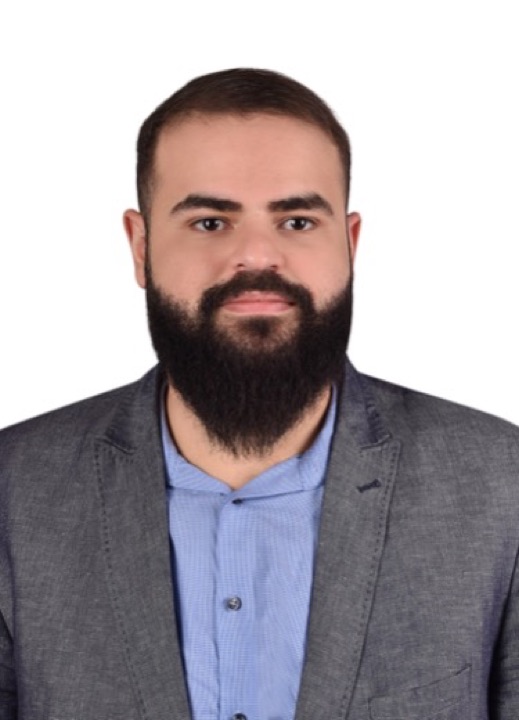
Omar Al-Othman
Founder & CEO
Omar Al-Othman founded Bara Al Sandoog and runs it. He is an electrical engineer by training and a software engineer by practice — and he has built each of these products himself.
More about Omar- Sector
- Vertical SaaS · Booking & messaging
- Stage
- Launched
- Based in
- Kuwait
- Total raised
- KWD 7,500