

Maqam
An Arabic music education platform that listens to a student play and corrects pitch and rhythm in true quarter tones — and puts their teacher inside the app with them.
At a glance
- Quarter tones per octave
- 24
- Instruments
- 4
- Evaluation working
- 2 of 4
- Scoring
- Deterministic
- Audio processing
- On-device
- Founders
- 2
- Arabic speakers
- 450M
- Paying users
- 0
Every Western engine assumes 12
Oud, violin, voice, qanun
Voice and qanun await calibration
Measured audio, not a model guess
Nothing uploaded or recorded
Engineering and a credentialed musician
Market defined by language, not geography
Beta accounts granted by hand
About
Every serious music-learning app in the world is built on twelve equal semitones. Arabic music has twenty-four quarters to the octave. That single fact is the entire business.
Maqam is not a translated version of a Western product. Serving Arabic music means rebuilding the detection layer so pitch resolves in quarter tones rather than snapping to the nearest Western semitone, the theory layer around maqamat and ajnas rather than major and minor, the notation layer with quarter-tone accidentals on the stave, and a curriculum ordering that no existing product has.
An incumbent cannot ship this as a feature. They would have to rebuild their core engine, and in their terms the market does not justify it.
The problem
Learning Arabic music today means a private teacher, an institute, or YouTube. There is no serious app-based option, and the reason is technical rather than commercial.
Every acoustic engine on the market — the ones behind apps with tens of millions of downloads — assumes twelve-tone equal temperament. Play a quarter tone into one and it will round you to the nearest Western semitone and mark you correct, or mark you wrong for playing your own scale accurately. Arabic music sits outside their coordinate system entirely.
The teaching problem is just as concrete. In a video lesson a teacher can hear one student at a time and is effectively deaf to the other five. Group instruction over video does not work for instruments, which is why Arabic music education has stayed one-to-one and in-person, and why it does not scale beyond the students who live near a good teacher.
What we built
The product works today across browser, PWA and desktop builds for macOS, Windows and Linux.
Oud and violin each have a full curriculum with evaluation working. Voice has eight lessons and qanun a 27-course tuning, both showing notes while their evaluation awaits calibration. A tuner, a structured learning path, sheet-music photo to playable notes, and hum-or-play to notation are all built.
The commercially important piece is the live class. The teacher sees every student's face alongside the note they are playing and their deviation in cents, in real time, on all of them at once. No video platform has that capability and no competing app offers it.
Two engineering decisions are worth naming because they signal how this team works. Scoring is deterministic arithmetic on measured audio, not a model's guess — re-run the same input and get the same score, which is not true of the "AI music tutor" pitches on the market. And the product refuses to score what it has not calibrated: qanun and voice show notes but withhold grades until the instrument is measured, and rhythm is judged only on oud, where device latency has been measured. Declining to invent a plausible number is a discipline most edtech lacks.
Audio never leaves the device. Nothing is uploaded or recorded — in a product aimed partly at children, that is a selling point and a regulatory shortcut at once.
Team
Maqam has two founders, and the division of labour is the point: the engineering measures, the musician decides what deserves measuring.
Mohab Attaallah sets the musical theory and curriculum. An oud player, composer and arranger, he graduated from the music education department at Assiut University in oud, taught oud there for two years, and has taught music in Kuwait since 2011, with festival, film and Kuwait Opera House credits.
Every constant the app uses to judge a student passes through him first. That matters more than it sounds: a wrong number here does not surface as a bug, it surfaces as a correct student being told they are wrong.
Market
Roughly 450 million people speak Arabic. The market here is defined by language rather than geography, which makes it global from day one. The ceiling is not the constraint here; reach is.
Bottom-up over three years: around 25,000 reachable teachers across MENA and the diaspora at KWD 18 a month, a large MENA consumer base at KWD 3.5, a smaller and richer diaspora segment at KWD 8, and roughly 600 institutes at KWD 120. At modest penetration that is an addressable annual figure near KWD 859k, with a realistic three-year share of KWD 200–350k of ARR.
The diaspora segment deserves particular attention: Arab families in Europe, North America and Australasia who want their children to learn oud, have no local teacher, hold foreign credit cards, and buy through app stores at Western price points.
Business model
Teacher-led, consumer-scaled — and the sequence matters more than the prices.
A free tier carries the tuner, theory lessons and limited graded practice. Students pay KWD 3.5 a month or KWD 35 a year for full graded practice across all instruments, or $9.99 a month on international store pricing outside MENA. Teachers pay KWD 18 a month for the live class, roster, student progress and notation tools. Institutes start at KWD 120 for multi-teacher access, admin and branding.
Consumer is the bigger number, but teachers come first for two reasons. Consumer acquisition costs money that a pre-seed company does not have, while a teacher costs one conversation and arrives with a class attached. And the teacher tier is the feature no competitor can copy, which makes it the defensible entry point. Consumer scale follows once students already inside a class start subscribing individually.
The margins are unusually good — 89% on the teacher tier, 86% on consumer — because evaluation runs on the user's device. There is no inference bill, which is a structural advantage over any competitor doing server-side analysis.
Consumer churn is modelled at 8% a month, deliberately pessimistically. Music apps bleed, motivation collapses in week three, and the teacher-led model exists partly because external accountability is the strongest known retention mechanism in music education.
Traction
There is none, and that is the honest headline. The product works, but accounts are granted by hand, nothing is on an app store, and nobody pays yet. Every figure in the model above is a projection.
What exists instead is capability: two instruments with working evaluation, two more showing notes and awaiting calibration, a live class no competitor offers, and builds running across browser, PWA and three desktop platforms.
The single thing worth more than the rest of this case is twenty teachers using it and reporting that it works. That is the first thing this round buys, and until it exists an investor is being asked to back a technical moat and a team rather than a business.
For scale, the category comparable is Simply, formerly JoyTunes: roughly $200M of revenue in 2024 at a $1B valuation, with its engine used by 10% of US piano teachers. It is also a caution — it took eleven years to reach $100M and was not profitable at that point. Consumer music education is a grind, not a rocket, and the model here is deliberately not a hockey stick.
Use of funds
- Engineering — calibration, mobile apps, store releaseKWD 20,000 · 27%
- Curriculum production — remaining instrumentsKWD 18,000 · 24%
- Teacher acquisition, Egypt and the GulfKWD 14,000 · 19%
- Founder stipendsKWD 12,000 · 16%
- Legal counsel — the convertible instrument, co-founder equity and vesting, IP assignmentKWD 5,000 · 6%
- Store fees, infrastructure, licensing, bufferKWD 6,000 · 8%
What this round delivers
- Live on the App Store and Play Store, signed builds, self-serve accounts
- 60 paying teachers across at least three countries
- 900 paying students
- Voice and qanun calibrated and grading
- 40% of students still practising at day 60
- Three institute contracts
Who is behind this
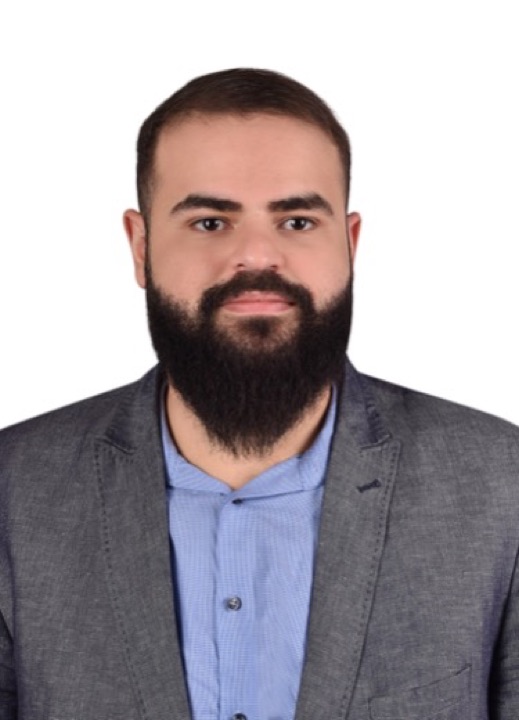
Omar Al-Othman
Founder & CEO
Omar Al-Othman founded Bara Al Sandoog and runs it. He is an electrical engineer by training and a software engineer by practice — and he has built each of these products himself.
More about Omar- Sector
- EdTech · Music
- Stage
- Building
- Based in
- Kuwait